Chatbot vs Live Chat: Which Is Right for Your Small Business?
Chatbot vs Live Chat: What’s the Right Choice for Your Small Business in 2026?
When it comes to customer support, small businesses face a critical decision: should you invest in live chat with human agents, deploy an automated chatbot, or use both? This choice can significantly impact your customer satisfaction, operational costs, and ability to scale. Let’s break down everything you need to know about the AI chatbot vs live chat debate so you can make the right decision for your business.
Understanding the Basics: What’s the Difference Between Live Chat and Chatbots?
Live chat connects customers directly with human support agents in real-time through a messaging interface on your website or app. When a customer has a question, they type their message and a real person responds, creating a conversational back-and-forth similar to texting with a friend.
Chatbots, on the other hand, are automated software programs that simulate human conversation using pre-programmed responses or artificial intelligence. Modern customer service AI chatbots can understand natural language, answer common questions, and even handle complex inquiries without human intervention.
The fundamental difference is simple: live chat requires human agents to be available, while chatbots operate 24/7 without breaks. However, this distinction is just the starting point when evaluating chatbot vs live chat solutions for your business.
Live Chat vs Chatbot: Key Features Compared
Response Time and Availability
Live chat support depends on your team’s availability. If you operate during business hours, that’s when customers can reach you. Chatbots, however, never sleep. They provide instant responses at 3 AM on a Sunday just as readily as they do on a Tuesday afternoon.
Conversation Quality
Human agents excel at understanding nuanced questions, showing empathy, and adapting to unique situations. They can read between the lines and provide personalized recommendations. While AI chatbots have improved dramatically, they may still struggle with complex or unusual requests that fall outside their training.
Handling Capacity
One live chat agent typically handles 2-4 conversations simultaneously. A chatbot can manage thousands of conversations at once without any degradation in response time or quality.
Cost Structure
Live chat requires ongoing labor costs including salaries, benefits, and training. When comparing chatbots vs live chat, automation often proves more cost-effective for businesses handling high volumes of repetitive questions, though initial setup and maintenance for sophisticated AI systems can be substantial.
When Comparing AI Chatbots vs Live Chat Makes the Most Sense
Choose AI Chatbots When:
Your business receives a high volume of repetitive questions. If 80% of your inquiries are about shipping times, return policies, or password resets, a chatbot can handle these efficiently while freeing up human resources for more complex issues.
You need 24/7 availability but can’t afford round-the-clock staffing. Small businesses competing with larger companies can level the playing field by offering always-on support through automation.
You’re scaling rapidly and need to handle growing support volume without proportionally increasing headcount. Chatbots scale infinitely at minimal additional cost.
Your customers prefer self-service options. Many modern consumers actually prefer finding answers themselves rather than waiting for a human agent, especially for simple questions.
Choose Live Chat When:
Your product or service is complex and requires detailed explanation. High-value B2B services, technical products, or customized solutions often demand human expertise.
Customer relationships are central to your business model. Luxury brands, boutique services, and relationship-driven businesses benefit from the personal touch that only humans provide.
Your inquiry volume is manageable. If you’re handling 20-50 chats per day, the cost and complexity of implementing a sophisticated chatbot system may not be justified.
You’re in a crisis management situation. When customers are upset or dealing with sensitive issues, human empathy and problem-solving abilities are irreplaceable.
Cost Considerations of AI Chatbots and Live Chat for Small Businesses
When evaluating live chat vs chatbots, budget realities often drive the final decision for small businesses.
Live Chat Costs:
- Agent salaries (typically $30,000-$50,000 annually per full-time agent)
- Live chat software ($20-$150 per agent per month)
- Training and onboarding expenses
- Management overhead
For a small team of 2-3 agents, you’re looking at $75,000-$200,000 annually depending on location and experience level.
Chatbot Costs:
- Basic chatbot platforms: $50-$500 per month
- Advanced AI chatbot solutions: $500-$5,000+ per month
- Initial setup and integration: $2,000-$20,000 depending on complexity
- Ongoing optimization and maintenance
While AI chatbot vs live chat initial costs might seem comparable, the economics change dramatically as you scale. Adding chatbot capacity costs nothing, while each new live chat agent represents significant recurring expense.
Customer Experience: What Your Customers Actually Prefer
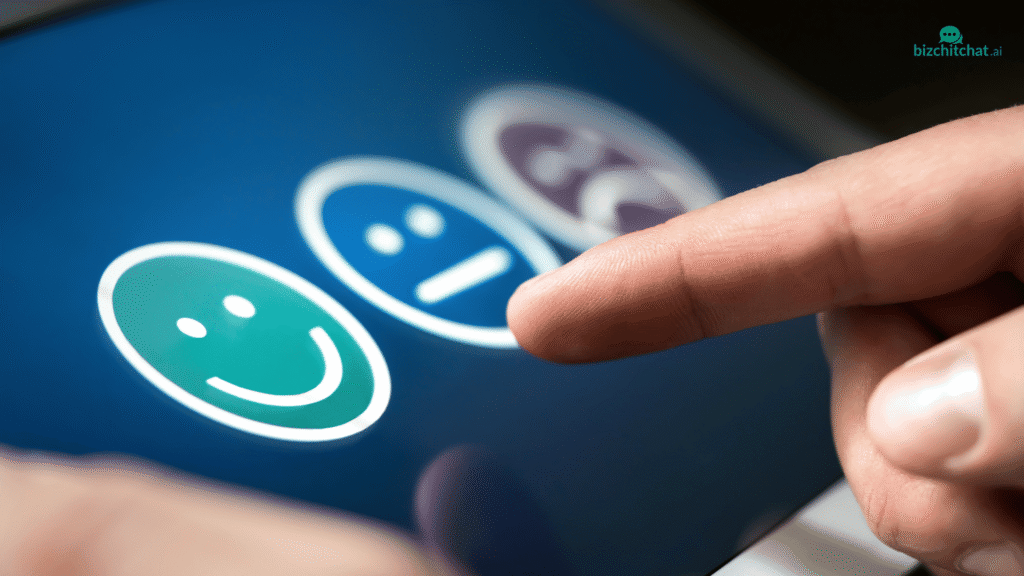
Customer preferences in the live chat vs chatbots debate aren’t as clear-cut as you might think. Research shows mixed results depending on the situation and implementation quality.
What customers love about chatbots:
- Instant responses with zero wait time
- Available whenever they need help
- Quick answers to simple questions without small talk
- No judgment for “stupid” questions
What frustrates customers about chatbots:
- Inability to understand context or nuanced questions
- Repetitive responses that don’t address the actual problem
- Difficulty escalating to a human when needed
- The feeling of talking to a wall when the bot doesn’t understand
What customers love about live chat:
- Empathy and understanding from real humans
- Flexibility to handle unique situations
- Ability to discuss complex issues conversationally
- Reassurance that someone cares about their problem
What frustrates customers about live chat:
- Wait times during busy periods
- Inconsistent quality depending on which agent they reach
- Limited availability outside business hours
- Sometimes slower for simple questions that could be answered instantly
The key insight? Customers don’t inherently prefer one over the other. They prefer whichever solution solves their problem fastest and most effectively.
Scalability and Growth for Chatbots and Live Chat
As your small business grows, your customer support needs will evolve. The ai chatbots vs live chat decision should factor in your growth trajectory.
Chatbot Scalability: Chatbots shine when handling growth. Whether you serve 100 or 100,000 customers, the same chatbot infrastructure works without modification. This makes them ideal for businesses experiencing rapid growth or seasonal spikes. Your Black Friday traffic surge doesn’t require hiring temporary support staff.
Live Chat Scalability: Scaling live chat means hiring, training, and managing more people. This takes time and creates operational complexity. However, it also builds a team with deep product knowledge and customer relationships that can provide valuable business insights.
The Optimal Growth Strategy: Many successful small businesses start with live chat to deeply understand customer needs, then gradually introduce chatbots to handle routine questions as patterns emerge. This approach lets you build the chatbot around actual customer conversations rather than guessing what people will ask.
The Hybrid Approach: Why Not Both?
The most sophisticated customer support strategies don’t view live chat vs chatbot as an either-or decision. Instead, they leverage both technologies to create a tiered support system.
How a Hybrid System Works:
First contact goes to the chatbot, which attempts to resolve the inquiry. For many simple questions about hours, shipping, returns, or account basics, the conversation ends here with the customer satisfied.
If the chatbot can’t help or the customer requests a human, the conversation seamlessly transfers to a live agent. The agent sees the entire conversation history, so the customer doesn’t need to repeat themselves.
The chatbot handles after-hours inquiries, collecting information and setting expectations about when a human will follow up. This beats having no support available at all.
Benefits of the Hybrid Model:
Your live chat agents focus exclusively on questions that require human intelligence, making their jobs more interesting and reducing burnout from repetitive questions.
Customer satisfaction improves because they get instant answers to simple questions while still having access to human help for complex issues.
You gather data on which questions your chatbot handles well and which need improvement, enabling continuous optimization.
Costs remain controlled because you’re not hiring agents to answer “What are your hours?” for the thousandth time.
Making Your Decision: Finding the Right Fit Between Chatbot and Live Chat
So which solution is right for your small business? Here’s a practical framework for deciding:
Start with Live Chat if:
- You’re just launching and need to learn what customers actually ask
- Your product is highly technical or consultative
- You handle fewer than 50 inquiries per day
- Your budget allows for at least one dedicated support person
- Personal relationships drive your business model
Start with a Chatbot if:
- You’re receiving repetitive questions that have clear answers
- You need 24/7 availability on a limited budget
- You’re experiencing rapid growth in support volume
- Your team is drowning in routine inquiries
- Your customers are tech-savvy and prefer self-service
Implement Both if:
- You have a mix of simple and complex inquiries
- You want to provide 24/7 coverage with human backup during business hours
- You’re ready to invest in a more sophisticated support infrastructure
- You have the resources to properly integrate and maintain both systems
Action Steps to Get Started:
First, audit your current support inquiries. What percentage could be answered by a simple FAQ? That percentage represents what a chatbot could potentially handle.
Second, calculate your costs. How much are you spending on support now? What would adding agents or a chatbot cost? Include setup time and ongoing maintenance in your calculations.
Third, consider your customers. Survey them or analyze support tickets to understand whether they value speed or personalization more for different types of questions.
Finally, start small and iterate. You don’t need a perfect solution on day one. Many businesses begin with a basic chatbot for FAQs while maintaining live chat for everything else, then expand the chatbot’s capabilities based on real usage patterns.
The choice between ai chatbot vs live chat isn’t about finding the objectively “better” option. It’s about finding the right fit for your specific business needs, customer expectations, and growth stage. By understanding the strengths and limitations of each approach, you can build a customer support strategy that serves your business today while positioning you for tomorrow’s growth.
Ready to Choose the Right Solution for Your Business?
Whether you decide on live chat, a dedicated AI small business chatbot, or a hybrid approach, the key is getting started. Don’t let analysis paralysis hold you back from improving your customer support, also check out our free AI Chatbot ROI Calculator which will help you understand the savings available when adopting chatbots for your business.
Take the next step:
- Still unsure? Use our decision tree above to find your perfect match in under 2 minutes
- Ready to implement? Start with a free trial of leading chatbot platforms like Intercom, Drift, or ChatGPT-powered solutions
- Want expert guidance? Contact our team for a free consultation on building your ideal support strategy
Remember: The best solution is the one you’ll actually implement. Start simple, gather data, and iterate as you grow.