
What is Voice AI? A Simple Guide to ASR, NLU & TTS
A Simple Guide to the Tech Behind Voice AI: ASR, NLU, and TTS Explained
Introduction: The Magic Behind the Voice

What is Voice AI and Why Should You Care?
Let’s be honest, talking to our devices still feels a bit like magic. Whether you’re asking your car’s sat-nav to find the quickest route to Manchester, telling your smart speaker to play your favourite radio station, or interacting with a company’s automated phone system, there’s a complex and fascinating technology working tirelessly behind the scenes. This is Voice AI, and it’s no longer a gimmick or a futuristic dream; it’s a powerful tool that’s fundamentally changing how we live, work, and do business right here in the UK.
But what is the technology behind Voice AI? How does a machine understand our wonderfully diverse British accents, figure out what we actually want, and then talk back to us in a way that sounds almost human?
You might think you need a degree in computer science to get your head around it. We’re here to tell you that you don’t. This guide is for the business owner in Bristol, the marketing manager in London, the customer service director in Glasgow, and anyone who’s curious about the ‘how’. We’ll demystify the core components, explain them with simple analogies, and show you why understanding this technology is crucial for gaining a competitive edge.
More Than Just a Smart Speaker: How Voice AI is Changing Our World

When you think of voice technology, the first thing that probably comes to mind is the smart speaker in your kitchen or the digital assistant on your phone. And while those are great examples, they’re just the tip of the iceberg.
In the UK, businesses are rapidly adopting Voice AI to transform their operations. It’s in the helpful chatbots for small businesses that assist with online bookings, the automated system that lets you pay a bill without waiting in a queue, and the software that transcribes a doctor’s notes. Leading voice AI companies are helping enhance customer experiences, boost efficiency, and open up new avenues for growth. This technology helps companies provide 24/7 support, understand customer sentiment, and make their services more accessible. In short, Voice AI is not just about convenience; it’s about creating smarter, more efficient, and more human-centric ways of interacting with technology.
The Core Components of Voice AI

The Three Pillars of Voice AI: ASR, NLU, and TTS
At its heart, a conversation with an AI is a three-stage process. Think of it as a digital team of three specialists, each with a very specific job. These specialists are:
- ASR (Automatic Speech Recognition): The Digital Ear.
- NLU (Natural Language Understanding): The Digital Brain.
- TTS (Text-to-Speech): The Digital Mouth.
For any voice interaction to be successful, these three components must work together seamlessly, in a fraction of a second. Let’s break down what each one does.
ASR (Automatic Speech Recognition): The Digital Ear

What is it? ASR is the first and most fundamental part of the process. Its job is to capture the sound waves of your voice and convert them into written text that a computer can read.
Analogy: Imagine you have a super-fast, multilingual stenographer who can listen to anything you say—no matter your accent or how quickly you speak—and type it out perfectly in real-time. That is ASR.
How does Automatic Speech Recognition work? When you speak, you create vibrations in the air. The ASR system’s microphone picks up these vibrations and converts them into a digital signal. The system then breaks this signal down into tiny, individual sounds called ‘phonemes’. In English, there are about 44 phonemes—the ‘k’ sound in ‘cat’, the ‘sh’ sound in ‘sheep’.
The ASR model, which has been trained on thousands of hours of speech from a huge variety of people, then analyses these phonemes. It uses complex algorithms and statistical models to predict the most likely sequence of words that those sounds represent. It’s a game of probabilities. Is it more likely you said “I scream” or “ice cream”? The ASR makes a highly educated guess based on context and its training.
Modern ASR has become incredibly sophisticated, capable of handling different accents (from Scouse to Brummie to the Scottish Highlands), filtering out background noise (like a busy café or office), and understanding the nuances of conversational speech. For any UK business wanting to use voice technology, a powerful ASR that understands the diversity of British English is non-negotiable.
NLU (Natural Language Understanding): The Digital Brain

What is it? Once your speech has been turned into text by the ASR, it’s the NLU’s turn to shine. NLU is the branch of AI that deals with reading comprehension. Its job is to take that raw text and figure out the meaning and intent behind it.
- Analogy: If ASR is the ear that hears the words, NLU is the brain that understands the context. It’s the difference between hearing someone say, “It’s a bit parky out today,” and understanding that they mean “It’s cold outside.”
What is Natural Language Understanding in AI? This is where the real intelligence comes into play. The NLU engine analyses the grammar, syntax, and relationships between words to extract key pieces of information. It performs two main tasks:
- Intent Recognition: It identifies what the user is trying to do. Are they asking a question? Giving a command? Making a purchase? For example, in the phrase, “Can I find a train from London to Edinburgh tomorrow morning?”, the intent is ‘find_train_ticket’.
- Entity Extraction: It pulls out the specific pieces of information (the ‘entities’) needed to fulfil the request. In our train example, the entities are: Origin: London, Destination: Edinburgh, Date: tomorrow, Time: morning.
NLU is what allows you to speak naturally to a machine. You don’t have to use rigid, specific commands. You can say, “I need a flight,” “Find me a flight,” or “Book a flight,” and the NLU will understand that the core intent is the same. It can handle ambiguity (“Book a table for eight” – is that 8 PM or 8 people?), and it learns over time to get better at understanding you. For businesses, this means customers can interact in their own words, leading to a much smoother and less frustrating experience.
TTS (Text-to-Speech): The Digital Mouth

What is it? TTS is the final piece of the puzzle. Once the system has understood your request and found the information you need, the TTS engine converts the text-based answer back into audible, human-like speech.
Analogy: Think of TTS as a talented voice actor who can read any script you give them—a weather forecast, driving directions, your bank balance—and deliver it in a clear, natural, and engaging tone.
How does Text-to-Speech create a voice? Early TTS systems sounded robotic because they simply stitched together pre-recorded sounds of individual phonemes. This is why old sat-navs would often pronounce street names in a clunky, unnatural way.
Modern TTS is worlds apart. Today’s best systems use deep learning and neural networks. These models are trained on vast datasets of human speech, learning not just pronunciation but also the rhythm, pitch, and intonation—the ‘prosody’—that make speech sound human. They can generate brand new audio waveforms from scratch, allowing them to speak any combination of words fluidly.
The technology has advanced so much that you can now choose from different voices, genders, and accents. Some advanced systems can even mimic emotional tones like empathy or excitement, which is a game-changer for customer service applications where tone of voice is everything.
Putting It All Together: A Day in the Life of Voice AI
So, how do these three pillars work together in a real-world scenario? Let’s trace a simple request from start to finish.

A Real-World Example: “Hey, what’s the weather like in Brighton today?”
- You Speak: You say the phrase to your device. The microphone captures the sound waves.
- ASR (The Ear) Listens: The ASR engine instantly gets to work. It analyses the sound signal, breaks it down into phonemes, and converts it into a line of text:
"what's the weather like in brighton today" - NLU (The Brain) Thinks: The text is passed to the NLU engine.
- Intent Recognition: It identifies your goal. The intent is get_weather_forecast.
- Entity Extraction: It pulls out the key details: Location: Brighton and Date: today
- The System Acts: The system now understands what you want. It queries a weather service’s database for the forecast in Brighton for the current date. The weather service returns the information as data (e.g., Condition: Partly Cloudy, Temp: 15°C, Wind: 10mph SW).
- TTS (The Mouth) Speaks: The system doesn’t just show you this data; it needs to respond verbally. It constructs a sentence in text, such as: “The weather in Brighton today is partly cloudy, with a temperature of 15 degrees Celsius.” This text is sent to the TTS engine.
- The Voice is Created: The TTS engine generates an audio waveform based on that text, complete with natural-sounding intonation, and plays it through the speaker.
All of this happens in the blink of an eye. It’s a seamless symphony of technology, turning a simple spoken question into a helpful, spoken answer.
The Future of Voice AI

What’s Next for Voice AI in the UK?
The technology is powerful now, but it’s evolving at an astonishing pace. The future isn’t just about more accurate transcription or more natural voices; it’s about creating deeper, more meaningful, and more capable conversational experiences.
Smarter, More Human-Like Conversations: The next frontier is moving from simple command-and-response to genuine, multi-turn conversations. The AI will remember the context of what you’ve already discussed, ask clarifying questions, and handle more complex, nuanced requests. Imagine a Voice AI that can act as a personal shopping assistant, discussing options with you, understanding your preferences (“Oh, that’s a bit too pricey,” or “Have you got it in blue?”), and leading you to the perfect product.
The Growing Impact on Our Lives and Businesses: For UK businesses, the opportunities are immense. We’ll see hyper-personalised customer service, where the AI knows a customer’s history and can speak to them with genuine empathy. We’ll also see a rise in sophisticated voice ai integrations, allowing employees to perform complex tasks—like filing reports or analysing data—just by speaking. It will break down barriers, making technology accessible to people with disabilities and driving a new level of inclusivity.
Conclusion: You’re Now a Voice AI Expert!
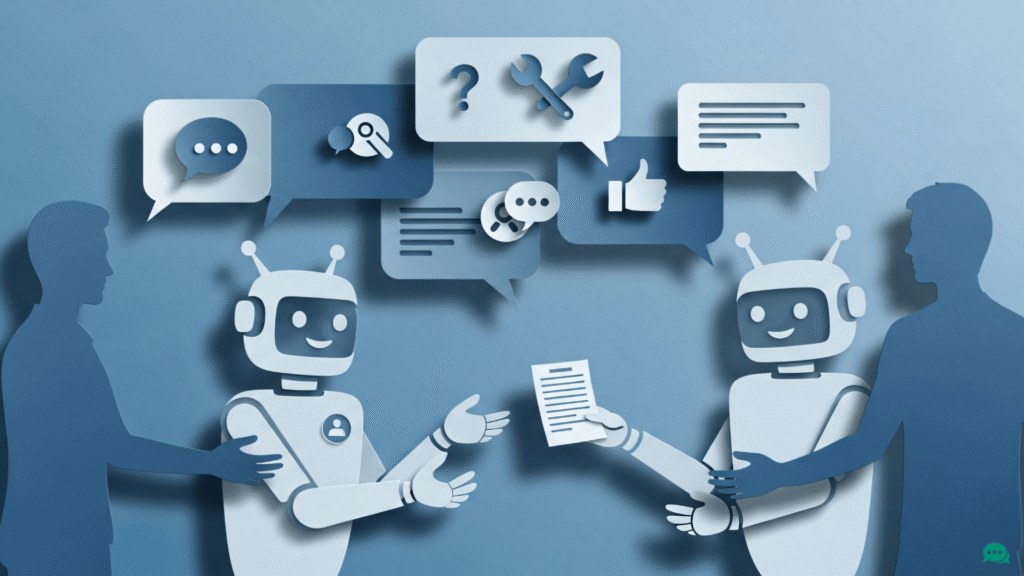
The ‘magic’ of Voice AI isn’t really magic at all. It’s the elegant collaboration of three distinct technologies:
- ASR to hear what you say.
- NLU to understand what you mean.
- TTS to reply in a human-like voice.
By understanding this ASR > NLU > TTS framework, you’ve grasped the fundamentals of one of the most important technological shifts of our time. You don’t need to be a coder to see the potential. You just need to understand the roles that the ear, the brain, and the mouth play in the process.
This technology is no longer a futuristic novelty; it’s a practical and powerful tool that’s available today. For more insights, feel free to browse our blog. For businesses across the UK, the question is no longer if you should adopt voice technology, but how and when.
Ready to explore how Voice AI can transform your business? You can get a quote today and discover how we specialise in creating intelligent, conversational AI solutions that drive real results.